Revitalizing Campus Spaces Builds Community and Catalyzes Growth
+36%
total enrollment growth since 2013
Reduced
the freshman discount rate to align with the national average
The University of the Ozarks launched a strategic plan to enrich student life, strengthen connections with its community, and reverse more than a decade of declining enrollment.
Facilitating stronger community connections benefits everyone.
When the University of the Ozarks welcomed a new president, the institution was facing a hard reality: more than a decade of declining enrollment had left the campus operating far below its ideal capacity. The new president made it his mission to reverse the trend and set the stage for growth. But the challenge extended beyond numbers on a dashboard—it was about identity.
Through strategic and campus planning, Carnegie helped the University of the Ozarks and its surrounding community develop a long-term plan to become a “college town” rather than a “town with a college,” a transformation benefiting students and neighbors alike. Today, the university and its community are pushing toward that goal together.
The Challenge
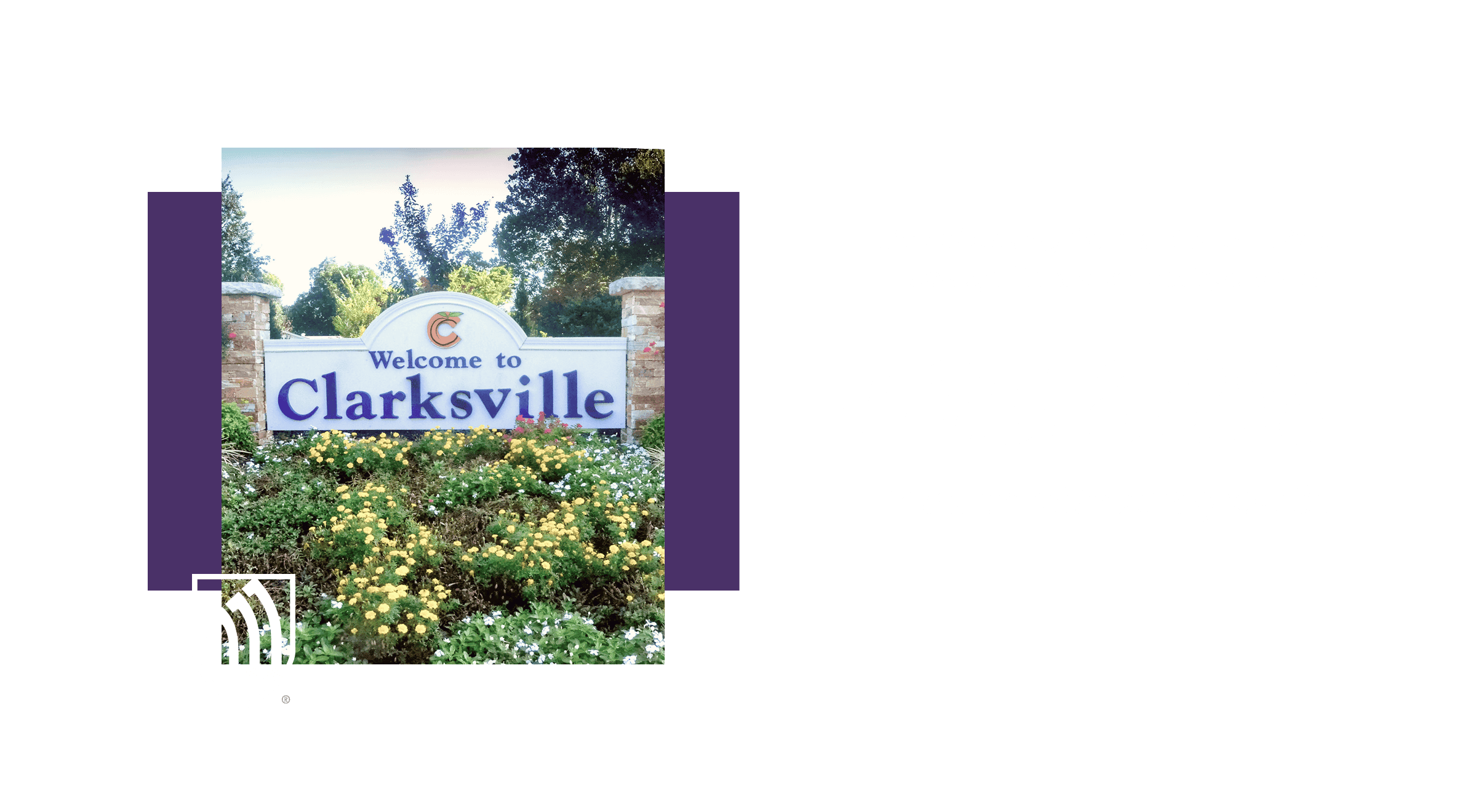
The town of Clarksville, Arkansas, was seen as a “town with a college” as opposed to a true “college town”. Without strong ties between the campus and the surrounding community, there was both a physical and emotional disconnect that limited student attraction, retention, and the university’s ability to thrive.
Ozarks also wanted to increase retention through improving the student experience via the campus environment. They wanted to make better use of the space already available and create spaces and places where students could feel at home. This tied into goals related to the community—creating a seamless experience between the campus and the town.
Our Approach
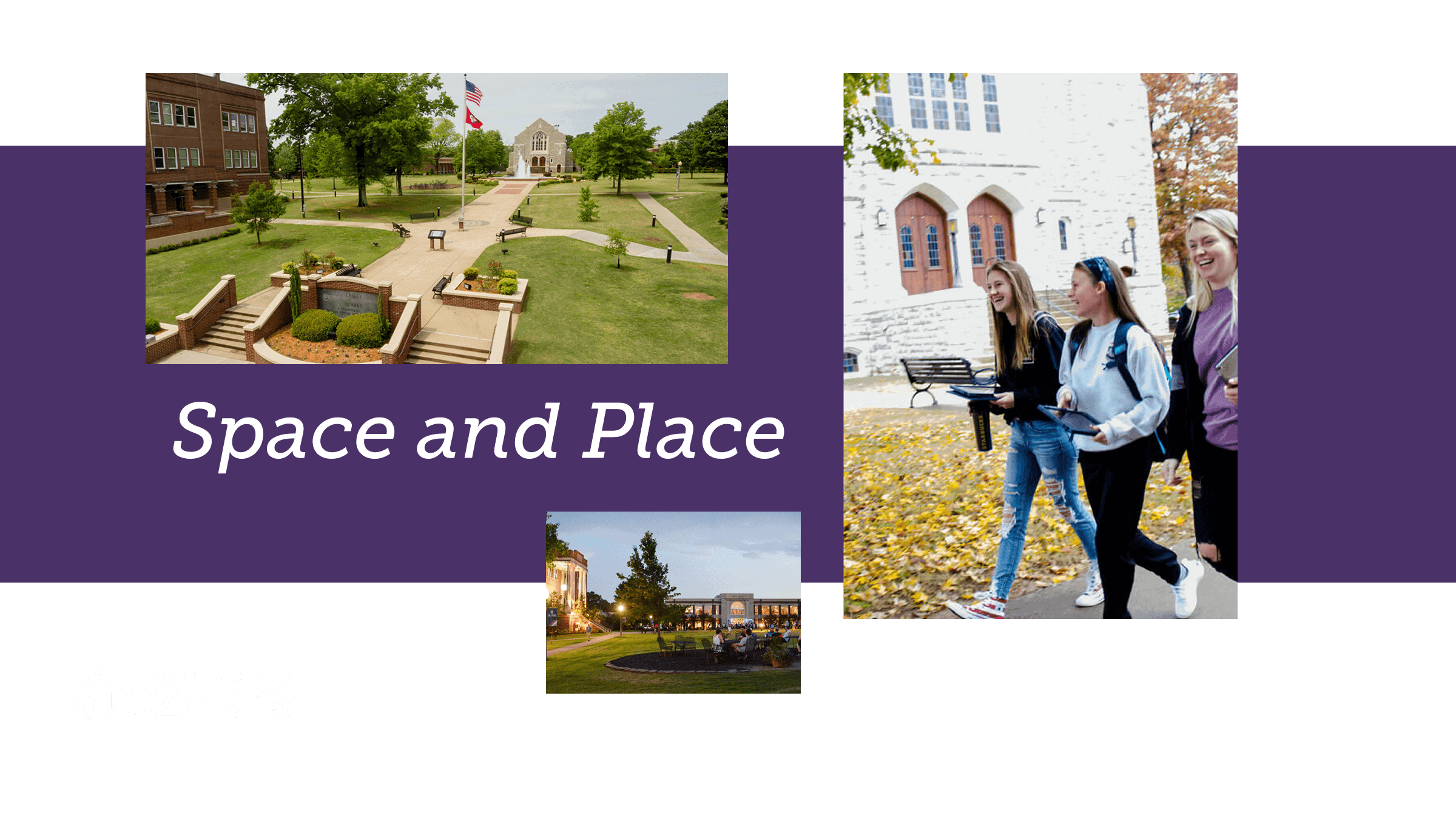
At the heart of our work was “space and place” planning. We focused on how the design and activation of campus and community spaces could reshape perceptions, spark economic vitality in the town, and, ultimately, transform enrollment and retention outcomes for the institution. Our partnership and path to transformation began with a series of leadership retreats, aligning key stakeholders on the work to be done and their campus’s potential. We used data-driven economic impact studies to demonstrate how the campus and community outcomes were intertwined.
In addition to large-scale projects, such as renovations and new construction of housing and science facilities, it became clear that focusing on smaller but important details could also spark big change. Changes like removing physical barriers—such as the chain-link fences that once walled off parts of campus—could open up the university to the community. Improving pathways and street lighting on campus could encourage students to access campus events, feel more connected, and thrive on campus.
What began as a turnaround strategy grew into something larger: a shared vision that reimagined not just how students experienced campus, but how the university and its community could thrive together.

What Worked
- A series of leadership retreats empowered the president, faculty, and trustees to reimagine their campus and its potential.
- Economic impact studies demonstrated how revitalizing the campus could generate lasting benefits for both the institution and the surrounding town.
- “Space and place” planning created a concrete roadmap for how the physical environment could support the new vision—from academic and residential facilities to better pathway lighting.
- Small but symbolic changes made the university more welcoming and connected to the community.
- Significant capital investment for renovations and new construction for student housing and science facilities to invest in the physical environment on campus.
- A student-centered vision led to clustering athletic facilities and building “third spaces” where students naturally gravitated toward common space outside the classroom.
- The connected campus enabled the town to attract new businesses—restaurants, barbershops, and shops—that enriched the student experience and drew the university and community even closer together.

The Results
Developing and working toward a goal of transforming from a “town with a college” to a true “college town” sparked growth both on campus and in Clarksville. New businesses and revitalized spaces enriched student life, strengthened town-gown connections, and contributed directly to enrollment. The change in perspective yielded impressive, long-term results that demonstrate the power of an integrated campus plan.
+35%
total enrollment growth since 2013
Reduced
the freshman discount rate to align with the national average
0
complaints about housing following new residence hall openings
Minority-Serving Institution
designation achieved
55%
of the student population made up of people of color enrolled from the region

The genius of our master plan with Carnegie is that it was drawn in pencil, not stone. It set a vision but gave us the flexibility to adapt. That’s why, a decade later, we’re still right on track and able to seize opportunities as they come.
Carnegie helped us see that space matters. From sidewalks to residence halls to athletic facilities, they helped us create places where students feel connected, welcome, and part of a community. At our athletic fields, I noticed that our men’s baseball team was at the edge of their field watching the women’s soccer team. That’s the kind of connection that happens when spaces are thoughtfully designed to bring students together, when the athletic fields are built next to each other instead of their own corners of campus. That sense of belonging has directly improved retention.
Services That Drive Success
Related Case Studies
Let’s Write Your Success Story
Get in touch to start the conversation about how we can help your institution thrive now and prepare for whatever comes next.